Meet the Artists
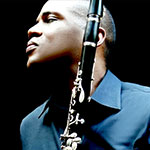
Terrance Patterson
Founder and Artistic Director - Clarinet
Terrance Patterson
Founder and Artistic Director - Clarinet
A Jacksonville, Florida, native, Terrance Patterson has performed in Paris, London, Milan, Brussels, Belgrade, Munich, Amsterdam, Moscow, Washington, D.C., Baltimore, Miami, Philadelphia, Los Angeles, and New York. He has performed with the Jacksonville Symphony Orchestra, the Sphinx Symphony of Detroit and the Nashville, Florida West Coast, Huntsville, Festival, and Las Vegas Symphonies. He attended the Peabody Conservatory of the Johns Hopkins University where he studied with clarinetist Lorin Kitt, principal clarinetist of the National Symphony Orchestra.
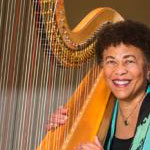
Ann Hobson Pilot
Harp
Ann Hobson Pilot
Harp
After 40 years with the Boston Symphony Orchestra, legendary principal harpist, Ann Hobson Pilot, retired at the end of the Tanglewood 2009 season.
Ann Hobson Pilot is a graduate of the Cleveland Institute of Music under Alice Chalifoux. She became principal harp of the Boston Symphony Orchestra in 1980, having joined the BSO in 1969 as assistant principal harp and principal with the Boston Pops. Ms. Pilot has had an extensive solo career. She has performed with many American orchestras as soloist, as well as with orchestras in Europe, Haiti, New Zealand, and South Africa. She has several CDs available on the Boston Records label, as well as on the Koch International and Denouement labels. A new CD has been released this year on the Harmonia Mundi label with music of Astor Piazzolla. In May of 2010, Ms. Pilot was the recipient of an honorary Doctor of Music degree from Tufts University and one from Bridgewater State College in 1988. Ms. Pilot recently retired from the faculties of the New England Conservatory of Music and Boston University. She will continue to teach in the summers at the Tanglewood Music Center and the Boston University Tanglewood Institute. She has performed with the Boston Symphony Chamber Players, Marlboro Music Festival, Newport Music Festival, Sarasota Music Festival and the Ritz Chamber Players.
She and her husband, Prentice Pilot, are currently residents of Osprey, Florida.
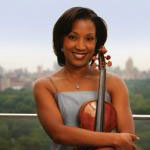
Kelly Hall-Tompkins
Violin
Kelly Hall-Tompkins
Violin
One of New York City’s most in-demand violinists, Kelly Hall-Tompkins’ dynamic career spans solo, chamber, and orchestral performance. Her solo performances include the Dame Myra Hess Series in Chicago, broadcast live by WFMT Radio; in Baltimore, the Peggy and Yale Gordon Trust performances; and, through a special grant from the IBM Corporation, concerts at the Peace Center in Greenville, South Carolina. Ms. Hall-Tompkins has been a soloist with the Dallas, Greenville, and Monmouth Symphonies, the Philharmonic of Uruguay, the Gateways Festival Orchestra, the Festival of the Atlantic Orchestra, and the Atlanta University Orchestra and her performances in recital have been featured on several occasions on the McGraw-Hill Young Artist Showcase, broadcast in New York by WQXR. Ms. Hall-Tompkins’ distinguished orchestral career has included extensive touring in the United States and internationally with the renowned Orpheus Chamber Orchestra. In 1999 she won auditions held by the New Jersey Symphony Orchestra and was subsequently appointed to the orchestra’s First Violin section. Hall-Tompkins began her violin studies at age nine. She earned a Master’s degree from the Manhattan School of Music under the mentorship of Glenn Dicterow, concertmaster of the New York Philharmonic.
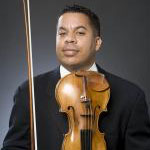
Kyle A. Lombard
Violin
Kyle A. Lombard
Violin
Kyle A. Lombard, a native of Kansas City, Missouri, was born in 1975. A recipient of Indiana University’s Performer Certificate and also a graduate of Yale University, Mr. Lombard enjoys a great variety of musical activities. As a chamber musician, Mr. Lombard has performed throughout Europe, the Middle East and the U.S. As a member of the Goffriller Piano Trio, Mr. Lombard’s performances were broadcast on Israeli Public Radio during Isaac Stern’s 3rd International Chamber Music Encounters in Jerusalem. As a soloist, Mr. Lombard debuted with the Kansas City Symphony at age 16. He has also concertized with the Savannah Symphony and the Sphinx Symphony, as well as recent recitals at the MOJA festival in Charleston, South Carolina and on the recital series of Southern Illinois University. Mr. Lombard has performed with the SLSO since the 1999/2000 season and is also on the faculty of the Webster University Community Music School.
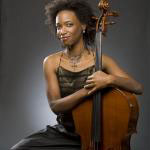
Tahirah Whittington
Cello
Tahirah Whittington
Cello
Cellist Tahirah Whittington, originally from Houston, Texas, has performed for audiences in the United States, Chile, Japan, France, Italy, and Spain. Her solo performances have included appearances with the National Symphony Orchestra in Washington, D.C., and the Ann Arbor Symphony in Michigan, as a result of winning first prize at the 1999 Sphinx Competition. An avid chamber musician, Ms. Whittington is a member of the acclaimed Core Ensemble (piano, cello, percussion) that tours with an actor and performs Chamber Music Theater. She is also a member of the Ritz Chamber Players based in Jacksonville, Fla. Ms. Whittington received her Master of Music in cello performance from The Juilliard School under the tutelage of Joel Krosnick and received her Bachelor of Music at the New England Conservatory as a student of Laurence Lesser.
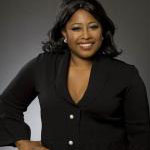
Alison Buchanan
Soprano
Alison Buchanan
Soprano
British Soprano Alison Buchanan is making a name herself internationally as a versatile and accomplished singer. During the 2006/7 season the soprano made her Carnegie Hall debut, premiered the Opera Hear our Voice in Prague, London and Nurenberg, made her debut with the Jaxsonville Symphony and the Philippines Philharmonic. This year Alison joined the Israel Kibbutz Orchestra on a national tour of Israel singing Bess (Porgy & Bess) and sang the role of Palmyra in the opera Koanga by Delius at Sadlers Wells in London marking the 200th anniversary of the abolition of slavery by the British. Buchanan has performed many times under the Baton of Sir. Colin Davis; as Elvira (Don Giovanni), 2nd Niece (Peter Grimes with the LSO) and in Beethoven’s Missa Solemnis. Buchanan is a member of the Ritz Chamber Players based in Jacksonville who most recently gave concerts in Baltimore, Chicago, Augusta and Harrisburg. The soprano also appears each summer in Prom’s concerts around the UK with the Royal Philharmonic Orchestra. Alison made her New York City Opera debut in 2002 as Bess in Porgy & Bess followed by Elvira (Don Giovanni) and has appeared at the Royal Opera Covent Garden, Michigan Opera Opera company of Philadelphia and San Francisco Opera to name but a few.

Robert Sims
Lyric Baritone
Robert Sims
Lyric Baritone
Robert Sims, Gold Medal winner of the American Traditions Competition, has been hailed by critics for his rich tone, energetic performances, and convincing stage presence.
Mr. Sims has been highly praised for his moving interpretations of African American spirituals, and has given numerous recitals of them throughout the United States, Europe, Africa and Asia. He has appeared with many orchestras in the U.S., and toured Japan with the Pacific Music Festival Orchestra where he was featured in a nationally televised performance of Bernstein’s Opening Prayer. In 2005, Sims made his recital debut at Carnegie Hall and was invited by Jessye Norman to participate in Honor! A Celebration of the African American Cultural Legacy at Carnegie Hall in March of 2009. He has performed in concert at New York’s Lincoln Center, the Smithsonian Institution, the Ravinia, Chautauqua, Savannah, Grant Park, and Big Arts summer music festivals, the Latour de France International Music Festival, and the celebrated American Church in Paris. Under the auspices of Canti Classics, Community Concerts, and Live On Stage Series, Sims has performed more than 150 recitals throughout the United States.
Demarre Mcgill
Flute
Demarre Mcgill
Flute
Winner of a 2003 Avery Fisher Career Grant, flutist Demarre McGill has performed concerti with the Chicago Symphony, Philadelphia Orchestra, Pittsburgh Symphony, San Diego Symphony, Baltimore Symphony and Milwaukee Symphony, among others. An active chamber musician, Mr. McGill is a member of the Jacksonville, Florida based Ritz Chamber Players and has been a member of Chamber Music Society Two, the Chamber Music Society of Lincoln Center’s program for emerging young artists. He has been featured on a PBS “Live From Lincoln Center” broadcast with the Chamber Music Society performing Bach’s Brandenburg Concerto #2 as well as on an Angel Records CD playing Bach’s Brandenburg Concerto #5 with pianist Awadagin Pratt and the St. Lawrence String Quartet. Mr. McGill has participated in the Music from Angel Fire, Santa Fe, Kingston, Cape Cod, Music@Menlo, Bay Chamber Concerts, Mainly Mozart, La Jolla and Marlboro music festivals. He has also performed on the Ravinia Festival’s “Rising Star” series, the A&E Network Series “The Gifted Ones,” and was special guest on the Mr. Roger’s Neighborhood television program.
Currently principal flutist of the San Diego Symphony, Mr. McGill has held the same position with The Florida Orchestra and the Santa Fe Opera Orchestra. He also served as acting principal flutist of the Pittsburgh Symphony during the 2005-06 season.
In addition to his performance schedule, Mr. McGill is the co-founder and Artistic Director of Art of Élan, a chamber music organization in San Diego that aims to expose new audiences to classical music.
Mr. McGill received his Bachelor’s Degree in Flute Performance from The Curtis Institute of Music where he studied with Julius Baker and Jeffrey Khaner. He continued his studies with Mr. Baker at the Juilliard School, where he received a Masters of Music degree.
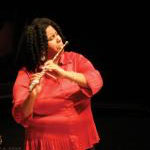
Judy Dines
Flute
Judy Dines
Flute
A native of Washington DC, Judy Dines began studying the flute at the age of six. She won several competitions, including first prize in the National Symphony Young Soloists Competition and first prize in the Temple University Student Soloist Competition. She graduated from Temple University with a Bachelors degree in Music Performance, and was a Master’s degree candidate at the Peabody Institute. Her principal teachers include Alice Weinreb, Murray Panitz, Kazuo Tokito and Robert Willoughby. Currently, Ms. Dines plays in the Houston Symphony.
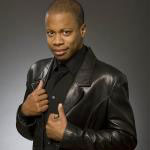
Terrence Wilson
Piano
Terrence Wilson
Piano
Since his professional debut with the Philadelphia Orchestra, American pianist Terrence Wilson has established a reputation as one of today’s most gifted young instrumentalists. He has already appeared with many other prestigious ensembles including the Houston Symphony under Christoph Eschenbach, the Atlanta Symphony under Yoel Levi, the Cincinnati Symphony under Robert Spano, the Orchestre de Chambre de Lausanne under Jesus Lopez-Cobos, the Detroit Symphony under Neeme Järvi, the St Louis and Colorado Symphonies under Marin Alsop, the Minnesota orchestra, and the Baltimore, Dallas, Indianapolis, San Francisco, and Columbus Symphonies. He has also made highly acclaimed recital debuts in New York, at the 92nd Street Y, in Washington, at the Kennedy Centre, and in Paris, at the Louvre. In 1998 Mr. Wilson was awarded the Avery Fisher Career Grant and in May 2001 he graduated from the Juilliard School where he received the prestigious Sony ES Award for Musical Excellence and most recently the William Petschek Award.
Leon Bates
Piano
Leon Bates
Piano
As one of America’s leading pianists, Leon Bates has earned for himself a place on the international concert circuit. His performance schedule includes dates across the United States, in Canada, Italy, France, Austria, Ireland, England as well as Africa. He is invited to perform on the major concert stages around the world and audiences and critics find his musical spirit to possess all the elements of greatness. Mr. Bates has performed with many of the major U.S. symphonies such as the Philadelphia Orchestra, Cleveland Symphony, New York Philharmonic, Los Angeles Philharmonic, San Francisco Symphony, Atlanta Symphony, Detroit Symphony and the Boston Symphony among others. In Europe, he has performed with the Vienna Symphony, the Basel Symphony, the Radio-Orchestra of Dublin, the Strasbourg Symphony, Orchestra Sinfonica dell’Accademia Nazionale di Santa Cecilia, Czech National Symphony Orchestra, Malmo Symphony of Sweden and more. Whether in recital or as a soloist with orchestra, his praises are enumerated in many different languages—but they are all in agreement on one point: Leon Bates is a major artist and one of America’s best.
Stewart Goodyear
Piano
Stewart Goodyear
Piano
A native of Toronto, Stewart Goodyear holds a master’s degree from the Juilliard School of Music studying with Oxana Yablonskaya. Goodyear has performed with the Philadelphia Orchestra, New York Philharmonic, Chicago Symphony, Pittsburgh Symphony, San Francisco Symphony, Los Angeles Philharmonic, Cleveland Orchestra, Academy of St Martin- in-the-Fields, Bournemouth Symphony, Montreal Symphony, Dallas Symphony, Atlanta Symphony, Detroit Symphony, Seattle Symphony, Cincinnati Symphony, Calgary Philharmonic, Winnipeg Symphony, and Mostly Mozart Festival Orchestra. Goodyear has collaborated with illustrious composers including Christoph Eschenbach, Daniel Barenboim, Michael Tilson Thomas, Sir Andrew Davis, Jukka-Pekka Saraste, Andrew Litton, Yakov Kreizberg, Emmanuel Krivine, Osmo Vanska, Charles Dutoit, Pinchas Zukerman, Jun Markl, Hugh Wolff, Stefan Sanderling, JoAnn Falletta, Gerard Schwarz, Peter Oundjian, Miguel Harth-Bedoya, and Roberto Minczuk. Most recently Goodyear made his subscription debuts with the Milwaukee Symphony Orchestra, the Royal Liverpool Philharmonic Orchestra, and the BBC Scottish Symphony Orchestra.
Orlando Wells
Violin
Orlando Wells
Violin
A native of Orange, NJ, Orlando Wells began studying the violin at the age of 9. While attending LaGuardia High School of Performing Arts, he picked up the viola. Mostly self taught in High School, he graduated winning the Behrens Foundation and B’nai Brith scholarships. Mr. Wells attended S.U.N.Y. Purchase and Mason Gross School of the Arts at Rutgers. His primary teachers have included Yuval Waldman and Michael Tree. Equally proficient on both the violin and the viola, he has held the principal viola chair with the Antara Chamber Orchestra and the concertmaster chair with the Soulful Symphony in Baltimore, the Orchestra of the Bronx and the Bronx Opera. He has appeared as a soloist with Antara, the Manhattan Virtuosi and the St. Peter by the Sea Orchestra. Mr. Wells also performs with The Northeastern Pennsylvania Philharmonic, SONYC Chamber Orchestra, The Ritz Chamber Players, Allentown Symphony, Sweet Plantain String Quartet, The Emerald Trio and the Radio City Christmas Show Orchestra. Performing frequently on Broadway, he has played regularly with Phantom of the Opera, The Producers, Spamalot, Wicked and was the violist on the first national tour of the Broadway show, Little Women. Currently he is the violist on the new Broadway show Crybaby. He has collaborated with musicians of many different genres and styles. Some of the artists he has worked with are John Legend, Mariah Carrey, Rihanna, Kanye West, Marvin Hamlish, the Akua Dixon Swing Quartet and Sojourner Strings.
Caleb Jones
Cello
Caleb Jones
Cello
Hailed “outstanding” by the Palm Beach Post, cellist Caleb Jones is rapidly establishing himself as one of classical music’s most versatile young artists. His career has taken him from concert halls such as
the Kennedy Center to performances in jazz clubs with great jazz musicians such as Gary Thomas. He has appeared in recital at the Kravis Center (FL), Santa Barbara Museum of Art, and Johns Hopkins
University’s Homewood House Museum. He was most recently the featured musician in the American premier of the Euripides play “Ion” at the Shakespeare Theatre in Washington, DC. Critics called his playing “fabulous” (DC Theatre Scene) and “incredible” (The Hill). Since 2006, Jones has been a member of the Young Eight, a string octet dedicated to diversifying the classical music audience through its adventurous programming and outreach programs. They have performed in concert series throughout the United States including Raleigh Chamber Music Guild (N.C.) and UW World Series (Seattle).The Young Eight is currently the ensemble-in-residence at Seattle University. Along with extensive outreach work with the Young Eight, he has worked with various organizations such as the Baltimore Symphony’s OrchKids, Boys and Girls Club of America, and the BE Community Foundation. Jones is a graduate of the South Carolina Governor’s School for the Arts and Humanities and holds degrees from the Peabody Institute of Johns Hopkins University and the Conservatory of Music at Lynn University.
Kevin Sharpe
Piano
Kevin Sharpe
Piano
After a “Triumphant” performance at the New Jersey Performing Arts Center and a successful debut in Carnegie Hall’s Weill Hall, Kevin Sharpe has been praised by critics and has enchanted audiences with his “precise touch” and “strong individual voice.” In September 2005, Raoul Abdul of the New York Amsterdam News proclaimed his performance at Merkin Recital hall to be “Magnificent”. The top prize – winner of the 1991 Johann Sebastian Bach International Piano Competition in Washington, D.C. His performances of Bach’s “Goldberg Variations” won him acceptance from New York’s critical elite when Bernard Holland of the New York Times declared, “Mr. Sharp’s rock-steady progress through this complex music reflected both understanding and command.” In his performance at the Kennedy Center’s Terrace Theater, Sharpe was described as “a thoughtful performer with an attractive ear for nuance and detail.” His performance of the great Bach work at Washington’s Organization of American States was broadcast live throughout the Latin Americas. Joanne Sheehy Hoover of the Albuquerque Journal describes Sharpe’s playing: “Just a few measures into the music and one heard an extra little push on a small downward leap in the bass. It was the slightest of gestures, a delicious surprise that would be followed by a multitude of such delicacies over the hour’s program.” International appearances have included concerts in Mexico, Iceland, Finland Argentina, Hong Kong, Ireland Warsaw and the Czech Republic.
Sharpe is a member of the “Ritz Chamber Players” which is the premiere chamber ensemble showcasing Afro-American musicians from all over the world. Recently Sharpe joined the group for their New York Debut in Carnegie Hall’s Weill Hall in performances of Prokofiev, Brahms and a World premiere by Composer Alvin Singleton. In May of 2006, Sharpe was awarded the distinction of a Fulbright Scholarship to Dublin Ireland where he taught and performed at the Conservatory of Music in the Dublin Institute of Technology.
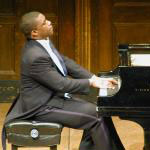
David E. Berry
Piano
David E. Berry
Piano
A native of Syracuse, NY, David E. Berry’s performances as soloist and chamber musician have been featured at venues such as Weill Recital Hall at Carnegie Hall, Bechstein Hall, the FOCUS festival, the Gateways Music Festival, as well as in live broadcasts of WQXR New York Times Radio. Mr. Berry has been a featured performer in the “Nights in the Gardens of Spain” and “Chopin, George Sand and Their Circle” Piano Series’ hosted by author David Dubal and was recently featured as soloist in the 2011 world premiere of Kevin Cummines’ Piano Concerto with the Hudson Symphony Orchestra. Mr. Berry was the Grand Prize Winner of the 2007 Bradshaw and Buono International Piano Competition, as well as a prizewinner in the Thousand Islands International Piano Competition. Mr. Berry received his Bachelors of Music with High Distinction from the Eastman School of Music, and Masters and Doctor of Musical Arts degrees from the Juilliard School. His primary piano instructors have included Martin Canin and Douglas Humpherys, with additional chamber music studies under Seymour Lipkin, Jacob Lateiner and Jonathan Feldman.
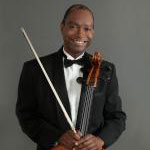
Kenneth Law
Cello
Kenneth Law
Cello
Kenneth Law enjoys a diverse career as performer, teacher and author. He is a member of the Fairfax (VA) Symphony Orchestra, Ritz Chamber Players (Jacksonville, FL), and Main Street Chamber Players. In addition to performances abroad as soloist and recitalist, his chamber music performances include appearances at the Washington (DC) Performing Arts Club and German Embassy, the Kennedy Center’s Terrace Theater, the Metropolitan Museum of Art, Jazz at Lincoln Center Concert Series, and Alice Tully Hall in New York City. Mr. Law has also performed in England, France, Scotland, Panama and Puerto Rico as a member of the Converse Trio. He has collaborated with such artists as Earl Carlyss (Juilliard String Quartet), Michael Tree (Guarneri Quartet), Ying String Quartet, Norman Carroll (concertmaster emeritus, Philadelphia Orchestra) and violinist Diane Monroe, and has recorded orchestral and chamber music for Albany Records, and the New Albion and Telarc labels. A recipient of the 2010 South Carolina ASTA Studio Teacher of the Year Award, Mr. Law’s students have been accepted to the Peabody and Oberlin Conservatories, Cleveland Institute of Music, Indiana University (Bloomington), Florida State University, Cincinnati College-Conservatory, Catholic University, University of South Carolina, University of North Carolina School of the Arts, and other respected schools of music throughout the southeast. His degrees and diplomas are from the Eastman School of Music, Cleveland Institute of Music, Peabody Conservatory, and The Juilliard School. During the summer, Mr. Law has served on the cello faculty of the Summit Music Festival, Vienna (VA) Summer Strings, Five Seasons Chamber Music Festival, Performing Arts Institute at Wyoming Seminary, and Colour of Music Festival. Mr. Law was recently appointed as Artistic Director of Cellospeak, a summer adult cello workshop. for more information about Kenneth Law, please visit his website: http://www.kenlawcello.com
Photo by Jenifer Morris
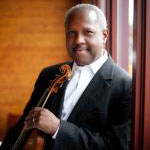
George Taylor
Viola
George Taylor
Viola
Violist George Taylor is active in practically every aspect of performance as soloist, recitalist and chamber musician.Mr. Taylor is currently Associate Professor of Viola at the Eastman School of Music. Before joining the Eastman faculty, he was a member of the Ciompi Quartet of Duke University, a position he held from 1979 through 1986. He has served on the artist faculties Musicorda, the Encore School for Strings, the Meadowmount School, the Manchester Music Festival and the Elan International Music Festival among others. He has also served as a juror for international competitions in Europe and the United States.
George Taylor has given numerous solo recitals and appeared as a chamber musician in concerts throughout the United States and at the Tainan Cultural Center in Taiwan. He was also co-founder and conductor of the St. Stephens Chamber Orchestra (Durham, NC), an ensemble that is still active in performance and recordings to date. An active advocate for the performance of music by African/American composers, Taylor was a participant in the National Black Arts Festival held in Atlanta, GA.. He is also a member of the Black Music Repertory Ensemble, which presents music of African/American composers in concerts throughout the country. Mr. Taylor has performed and premiered works written for him by many composers, including Ron Carter, Noel DaCosta, George Walker, David Liptak and Carmen Moore.
A native of New York City, Mr. Taylor attended the Manhattan School of Music where his teachers included Jaime Laredo, Raphael Bronstein and Burton Kaplan. Further studies on viola were with Michael Tree and Abraham Skernick. Chamber music studies include such notables as Arthur Balsam, Joseph Seiger, Lillian Fuchs, Joseph Gingold, Mischa Schneider,and members of the Guarnari Quartet. He made his recital debut at Carnegie Recital Hall in 1979. Joseph Horowitz of the New York Times wrote: ‘He is already an unusually accomplished player, with a secure command of the instrument, and an ardent, refreshingly direct style.”